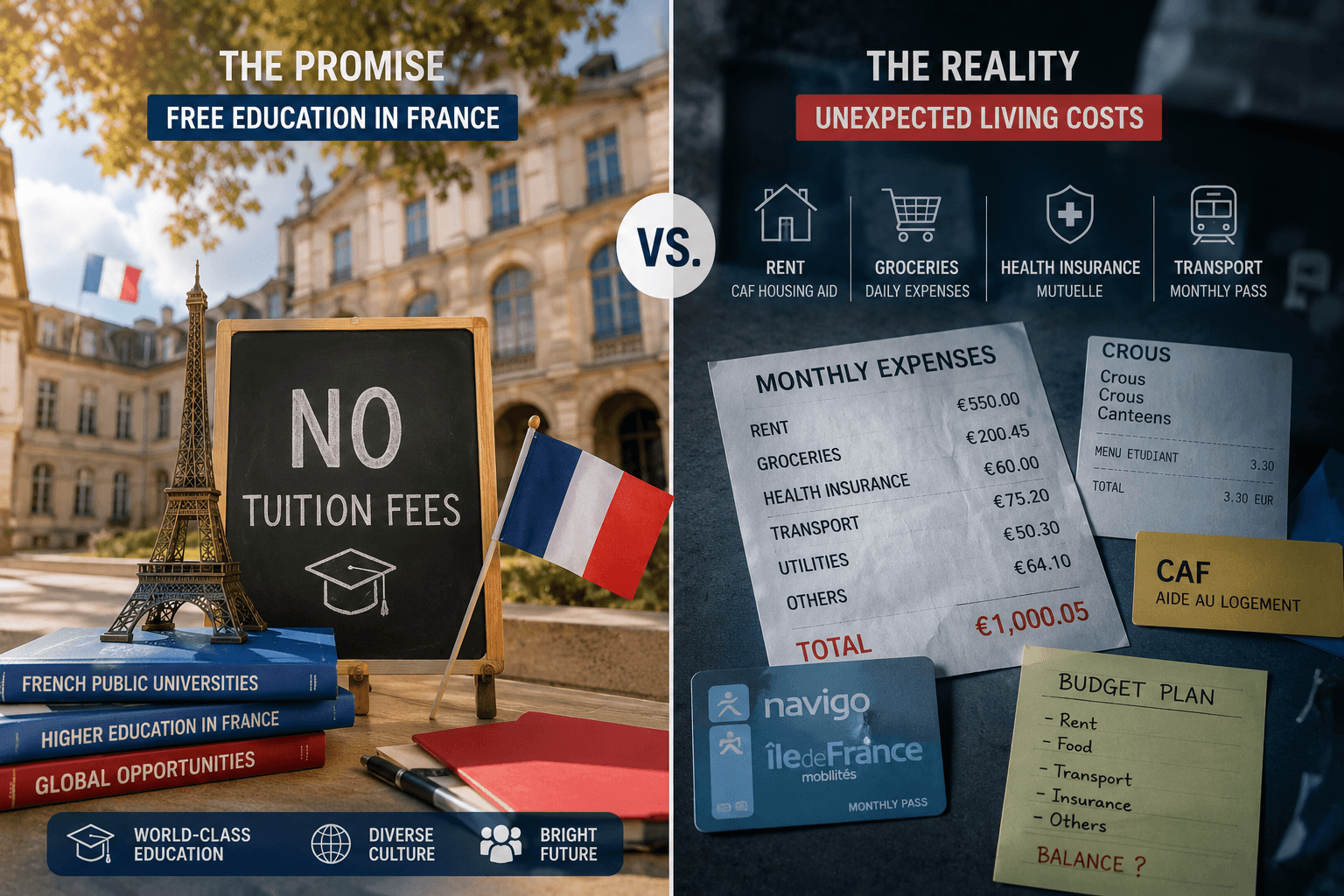
Free education in France doesn't mean all your living expenses as an Indian student are taken care of, many students from Ahmedabad are surprised by hidden costs after their tuition is waived. A lot of families focus only on university fees and overlook how daily life in French cities can end up costing more than what you save on tuition. If you don’t plan well, unexpected expenses for things like housing, transportation, and even groceries can throw off even the most careful budgets. Knowing exactly where your money goes can make the difference between just scraping by and actually enjoying life as a student abroad. Read on to see how smart students manage their budgets and make their money last.
What is saving money as an Indian student in France?
At NextDegreeAbroad, we've helped over 2,500 Indian students from Ahmedabad plan their finances for studying in France.
Is studying in France truly affordable for Indian students, or do hidden costs make it a challenge?
We watch a lot of Indian students get excited about free tuition at French public universities and forget that “free” only applies inside the classroom. The cost of living can come as a shock, especially to students from Ahmedabad where things like basic groceries, public transport, and eating out cost much less. From what we've seen, it’s not just about saving on fees, it’s also about how you manage your spending, and believe it or not, your cultural habits make a big difference.
Most newcomers quickly realize that it's not only tuition fees that affect their budget. You'll find out exactly what extras to plan for, from mandatory health insurance and housing deposits to daily spending on food and transport. We’ve seen it firsthand with our clients, those who stayed organized and tracked every rupee managed to save money without missing out on the French lifestyle. If you want to avoid running out of money in your first month, the next sections will guide you through each step.
Shopping at budget supermarkets in France keeps your grocery bills low, but if you buy those familiar brands from home, your expenses can easily double. Some Ahmedabad parents hope that sending extra homemade snacks will help, but we've seen students overspend by eating out or ordering food. Costs in Toulouse or Lyon won’t always match those in Paris, but remember that even in more affordable cities, your daily choices add up. The main thing is to keep an eye on all your expenses, not just big-ticket items.
Hidden costs beyond tuition fees
One big misconception is thinking tuition covers most of your expenses. In reality, hidden costs beyond tuition fees like transport passes, CAF housing aid applications, health insurance, and one-time registration fees all pile on extra monthly costs that many students overlook. Living in a CROUS residence helps with savings, but it’s tough to find space outside Paris; in smaller cities, sharing an apartment is usually cheaper than renting a room by yourself.
Culturally, we see that Indian students often don't realize how daily habits, like grabbing a coffee or hopping in a taxi, can quickly drive up expenses compared to life in Ahmedabad. Meal plans at CROUS canteens and student transport passes turn out to be essential ways to save money, even if they're not as fun as eating out. Practical budgeting workshops, like the ones we’ve hosted, help students plan for these “invisible” costs so they can manage them before things get out of hand. It’s not just about tuition: keeping track of every expense is how you keep your French dream within your budget.
Expert Note: Real budgeting sessions for newcomers often uncover overlooked recurring costs, like monthly phone bills and bank account charges, which can add €30-40 a month if you don't plan for them.
Key Takeaway: Track every recurring expense before you arrive, and update your budget each month so you don’t get hit with unexpected fees.
How free education in France impacts saving money as an Indian student
Are your dreams of studying in France affordable, or could hidden expenses throw off your plans?
What's free and what's not for Indian students
French public universities usually mean you don't pay high tuition fees, but free education doesn’t cover everything. Tuition waivers won’t pay for key costs like yearly administrative charges or mandatory health insurance, which every student has to budget for before even booking a flight. We've seen a lot of Indian students celebrate getting into a French university, only to be caught off guard later by extra expenses, registration, visa fees, and medical coverage can stack up quickly.
In our experience, figuring out what “free education” actually means is half the challenge for Indian students coming from Ahmedabad. Sure, you’ll save a lot on tuition, but you’ll still face the full range of France’s living costs, and those can change a lot between cities like Paris and Toulouse. A smart student doesn’t stop at the admissions letter; they dig deeper and question what’s not included in that “free” promise.
Typical expenses your tuition doesn't cover
Once you’ve handled tuition, the real work is creating a budget. Monthly rent can have a huge impact on your finances, especially in Paris, where prices are much higher than in Toulouse or Lyon. Even with help from CAF housing aid, you’ll need to account for deposits and sometimes have to furnish your own space. From what we’ve seen, Indian students save more each month by choosing shared apartments.
Food will take up a good chunk of your budget, so plan ahead, quick tip: CROUS university canteens offer hot meals at much lower prices than most French restaurants. Transport passes aren’t covered by tuition, but they’ll save you a lot compared to buying single tickets, particularly in larger cities. We always remind students that the little expenses really pile up: laundry, mobile bills, outings, and even those “cheap” groceries are all part of life in France. Smart budgeting is non-negotiable, look for local student discounts and low-cost supermarkets to make your euros go further.
Expert Note: Opening a French student bank account is the best way to get direct debit discounts on utilities and public transport, these aren’t usually available if you use a foreign bank account.
Key Takeaway: Set up a French bank account as soon as possible to access special discounts and make paying for essential student expenses much easier.
Essential cost breakdown: Living in France as an Indian student from Ahmedabad
Did you know France is actually one of the most affordable destinations for Indian students in Europe, with average monthly expenses much lower than places like the UK? According to Statista (2023), picking France could really cut your budget compared to bigger-name countries. At NextDegreeAbroad, we’ve met hundreds of Indian students from Ahmedabad who thought all of Europe came with high price tags. The truth? Where you choose to study in France matters a lot, we’ve seen clients save up to 30% per month just by choosing the right city over somewhere like the UK.
Monthly housing and accommodation options
Let’s be real, housing in Paris can look daunting for anyone from Ahmedabad. Statista (2023) shows average Paris rents running between €800 and €1,200 per month, but smaller French cities offer similar places for €400 to €700. We’ve found that many Indian families can afford studying in France if they consider student residences or shared apartments outside Paris.
Here's a quick comparison side by side:
| What to Compare | Paris | Smaller French Cities |
|---|---|---|
| Average Rent | €800-€1,200 | €400-€700 |
| Public Transport Cost | €70 | €30-€50 |
| Utility Bills | €100-€150 | €70-€120 |
| Food Expenses | €250-€300 | €200-€250 |
| Best for | Students preferring urban life | Students seeking cost savings and local culture |
A lot of our clients feel worried about Paris prices until we show them cities like Toulouse or Lyon. In these cities, students cut costs and experience real French culture far from tourist crowds, something most blogs tend to skip.
Daily expenses: food, transport, and utilities
Your daily spending adds up fast, not just your rent. Statista (2023) reports that food costs in Paris are between €250 and €300, but drop to €200 to €250 outside the capital. We also see student transport passes bringing travel expenses down to just €30 a month in smaller towns, compared to €70 in Paris.
We often see families stress over expenses until they find budget supermarkets like Lidl and meal deals at CROUS canteens, where you can get a hot, filling lunch for under €3. If you share an apartment outside Paris, utilities rarely go above €120 a month, a simple way to cut fixed costs even more. We’ve found that stacking student discounts on groceries and transport passes helps keep monthly expenses well under €1,000, even when prices in other areas go up.
Once families notice the lower costs and different lifestyle outside Paris, they realize their child’s French dream is possible, even on an Ahmedabad budget. At NextDegreeAbroad, our students regularly save 20-30% each month after moving into shared housing, avoiding pricey groceries, and grabbing student discounts from university portals.
Expert Note: In many French cities, signing up for utilities through student-run cooperatives can lower your connection fees and get you bundled internet offers that beat commercial rates.
Key Takeaway: Tap into student cooperatives or university partnerships for housing and utilities to boost your monthly savings.
Maximizing student benefits: Student discounts, university resources, and affordable living strategies
Are you missing out on over €300 each month in student perks that can make your stay in France much smoother?
Using your student card and campus amenities
Most newcomers don’t realize just how many doors their student card can open. With a valid card, students can snag discounts at local bookstores, save on meals at cafés, and get deals on movies or leisure activities for weekends. At one big university in France, lots of Indian students paid full price for months because nobody told them about these benefits. When the university held a special orientation about using student cards for campus amenities, those students started saving around €150 a month and enjoyed campus life a lot more.
Tapping into campus resources means more than just using the classroom. We can print for free at the library, use sports facilities at discounted student rates, and take advantage of free on-campus events to make our euros go further. Joining student-run groups is even better, they share insider tips on special deals and the best spots on campus to save money as an Indian student in France.
Public transport, health insurance, and cultural perks
Getting a student transport pass is probably the biggest budget hack when comparing the cost of living in France to Ahmedabad. Regular monthly fares in most French cities can surprise anyone from Ahmedabad, but with a pass, we usually pay less than half of what the public pays. This way, we can see more of the city without stressing about every bus or metro ride eating into our budget.
Student health insurance options, like the Sécurité Sociale étudiante system, can lift a big financial worry, something many new students don't see coming. We also love the cultural perks you get just for being a student: discounts or even free entry to museums, concerts, and festivals. When you join campus associations or student communities, you'll start hearing about all kinds of hidden freebies and deals, from local cinema tickets to annual art fairs.
When students use these strategies, they find more than just savings, they build supportive networks, handle French paperwork with less stress, and have more time to enjoy their studies and new experiences. At NextDegreeAbroad, many of our clients tell us how our guidance saved them hours of trouble, cut living costs, and showed them perks they had no idea existed.
Expert Note: Some French regions offer exclusive student welcome packs during university registration week, giving out public transport passes or grocery vouchers worth over €100.
Key Takeaway: Register early for local student welcome packs, you'll get bonus perks and cut down on your key expenses.
Scholarships, part-time work, and real strategies for saving money as an Indian student in France
Did you know that nearly 30% of Indian students in France depend on scholarships as their main source of funding? Many students from Ahmedabad arrive excited by the promise of low or free tuition in France, but then realize that daily living costs are the real hurdle. Tuition might be covered, but the expenses for food, rent, and transport in cities like Paris or Toulouse can quickly eat into your budget. To really save money as an Indian student in France, you need to think beyond free tuition and focus on a smart mix of scholarships, part-time jobs, and support from the community.
Major scholarships for Indian students
We’ve seen so many students lose out just because they didn’t apply for the right scholarships or missed the key deadlines. Some of the main options are the Charpak Scholarship, which is open for Indian students at all levels, and the Erasmus+ program, which can cover both tuition and everyday expenses for lots of exchange students. A common mistake is assuming scholarships are only for top performers, plenty are actually based on need or dedicated to specific fields.
Cultural integration programs can truly help: when students network through these, they often end up finding shared flats or getting accommodation subsidies like CAF, which lets their euros go further. Always stay organized with a deadline checklist, most scholarships want your application months in advance, and missing just one can mean paying the full amount. With NextDegreeAbroad, we’ve seen students save thousands simply by going after these grants early and pairing them with CAF housing help.
Rules for part-time work and earning potential
French law lets international students work up to 964 hours a year, which comes to about 20 hours a week during the term and full-time during breaks. The average part-time wage is close to minimum wage, but working on campus or at a CROUS canteen usually gives you more flexibility and can make meals a bit easier. While it’s tempting to pick up extra shifts, we always remind students to keep a balance between work and studies, failing exams often ends up being more expensive over time.
From what we’ve seen with Indian students, the ones who work while using meal plans at university canteens (where meals cost much less than eating out) and shop at budget supermarkets usually save more. Some of our clients managed to cut their monthly expenses by 40% after moving from private flats in Paris to shared apartments outside the city center. The key isn’t just earning more, it’s mixing smart housing choices, subsidies, and part-time work so you don’t get overwhelmed at school.
Smart saving money as an Indian student in France: Insider tips from Ahmedabad students
Want to know how Indian students from Ahmedabad manage to live in France on a tight budget and save money with practical tips?
Meal planning and affordable eating
Meal costs can quickly drain any student’s budget, especially after moving from Ahmedabad to cities like Toulouse or Paris. We’ve seen students lower their monthly food bills by planning their meals ahead of time, picking up basics at budget supermarkets like Lidl and Intermarché, and cutting out ready-made foods. Visiting local markets regularly helps too, produce there is often fresher and costs less than in big supermarkets.
What most people often get wrong is assuming that eating out is your only social choice. We've noticed lots of informal dinner clubs set up through Indian student groups, where everyone brings a dish and swaps recipes. This helps keep costs low and fights off homesickness. Some top food markets for deals are Marché Saint-Aubin in Toulouse, Marché de Belleville in Paris, and Marché Victor Hugo, also in Toulouse.
- Marché Saint-Aubin, Toulouse: Fresh fruits and veggies
- Marché de Belleville, Paris: Ethnic ingredients
- Lidl, Intermarché: Affordable French supermarkets
- Asian and Indian grocers: Great for comfort meal ingredients
- CROUS canteen: Discounted meals for students
- Marché Victor Hugo, Toulouse: Meats and cheeses
Second-hand shopping and community hacks
Furnishing a flat in France from scratch can drain your wallet unless you plan ahead. We usually suggest connecting with local Indian student groups even before you arrive, they often know the best spots for second-hand essentials and sometimes pass on stuff from graduates moving out. For example, students in the higher education scene have saved up to 30% simply by sharing resources and buying used items within their community.
Connecting with these groups isn’t just about finding things, you'll also find shared flat listings, ride-shares, and group meals through WhatsApp and local Facebook groups. We’ve come across "giveaway days" where graduates leave behind extra kitchenware and bedding for new arrivals, which lowers your startup costs. To join in, find Telegram or Facebook groups, introduce yourself, and ask about shared resources, most members are genuinely happy to help newcomers settle in and save.
Does free education in France truly cover all your living costs? A reality check for Indian students
Does the promise of free education in France actually cover all living expenses for Indian students?
Balancing budget: what you'll still pay
A lot of Indian students hear “free education” in France and expect to spend almost nothing, but tuition is just one part of the real cost. After you arrive in France, you'll run into expenses like housing, groceries, transportation, and insurance that often surprise families. We notice costs vary a lot depending on where you study, Paris is much pricier than cities like Toulouse, so using average numbers doesn’t always help.
You can't overlook the basics. Even if your university waives tuition, finding affordable housing is still your biggest concern. CAF housing aid is helpful, but it rarely covers all your rent, especially in big cities. Eating at a CROUS canteen does cut down food costs, but you'll still spend plenty on daily needs. At NextDegreeAbroad, we’ve seen students who choose shared apartments manage their budgets much better each month, showing that practical choices, much more than free tuition, help you save the most.
Common pitfalls and financial traps
Each year, we meet Indian students who are caught off guard because they misjudge the true cost of living or forget to apply for housing or transport allowances like CAF support and the student transport pass. Many skip the paperwork for discounts and end up spending more than their friends.
Just checking your monthly expenses isn’t enough. Set up a detailed monthly budget, check in on it regularly, and don't wait until you run into money problems. Nearly every international education consultancy, including ours, has helped students save more just by showing them how to track expenses, go over every bill, and always ask about scholarships or student discounts before signing leases or agreements.
Ready to stop doing this manually? Book a Free Consultancy. Book a free consultation and get your automation roadmap in 48 hours.