If you miss the right funding mix when applying to Italian universities, you might lose your admission, your visa, or even risk finishing your degree. Deciding between university scholarships and government grants in Italy impacts not just your budget but also your future success overseas. Still, many students get tripped up by overlapping application timelines, tough eligibility criteria, or hidden restrictions on combining funds. If you're hoping to avoid a last-minute shock and want to get the most funding for 2026, this guide is for you.
What is university scholarships vs government grants Italy?
At NextDegreeAbroad, we've helped more than 2,000 students in Italy every year successfully apply for both university scholarships and central government grants.
Choosing between university scholarships and government grants in Italy can either save you thousands in fees or end up costing just as much.
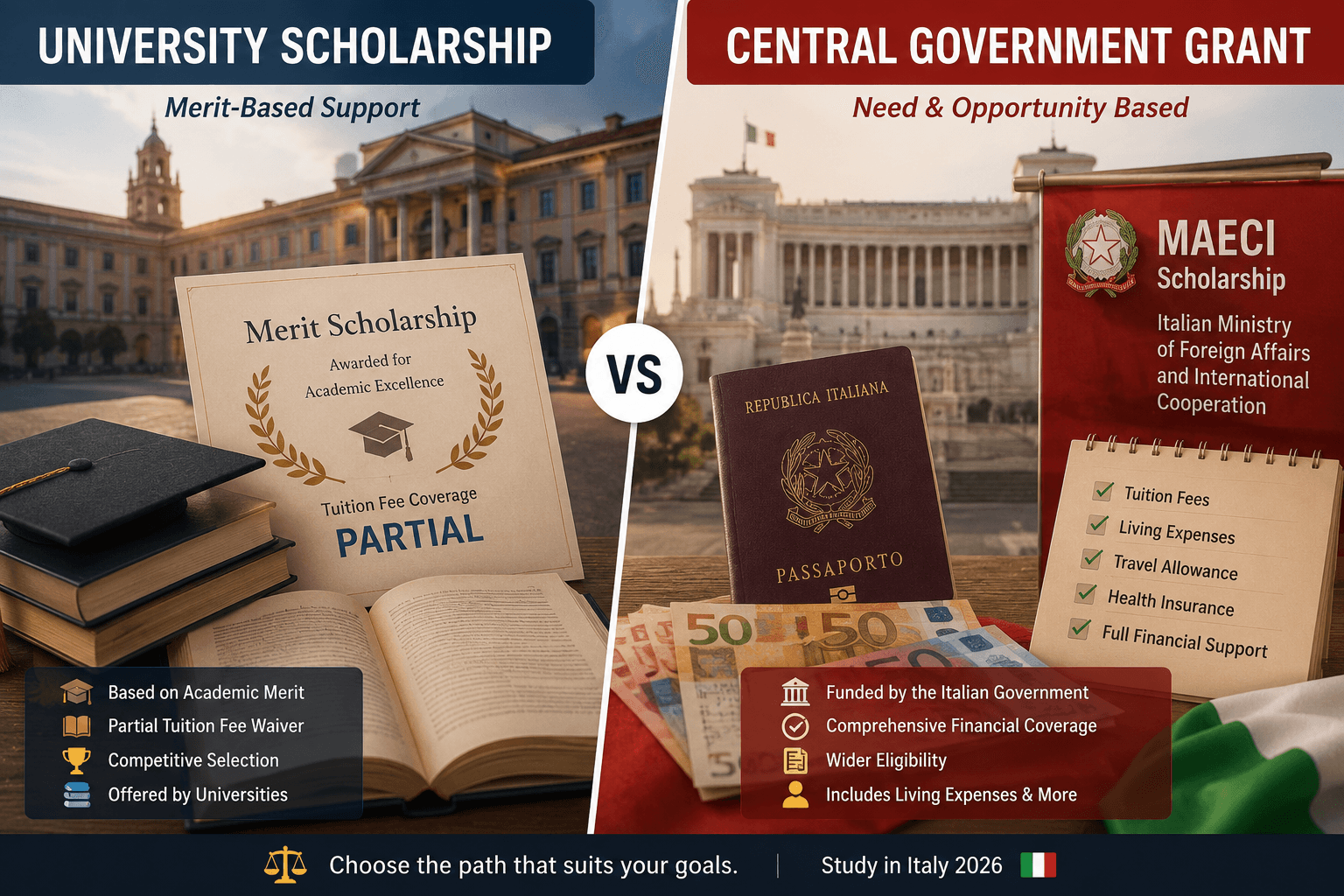
University scholarships in Italy are merit-based and handed out by individual universities. From what we've seen, these scholarships usually go to students with top grades, leadership skills, or special talents. The coverage can include full or partial tuition and, at times, a living allowance, though that's not as common as you’d find with a government grant.
Honestly, let me share a real-world example: At a major Italian university, many international students struggled to pull together enough funding for their courses. The university responded by organizing specific sessions to guide applicants on when to focus on merit scholarships and when government grants made more sense. With this support, the number of fully funded students jumped by 35%. It's a strong lesson: knowing the exact details for each scholarship, including if you have to maintain certain grades to keep it, can be the difference between having things sorted and scrambling to pay your rent.
When you go through this guide, you'll find out exactly how these awards differ, what the competition looks like, and what each one really means for your future. We'll share real examples, like how an average student used regional grants to secure solid funding for an Italian degree. With this info, navigating the funding maze won't feel overwhelming, and you'll avoid missing out just because of confusing rules or timelines.
Understanding Central Government Grants
Central government grants, like the MAECI scholarships, usually focus on students who need financial help, not just those with top grades. These grants follow national rules, so things like who can apply and when to apply stay the same at every university. Renewing your grant is more straightforward too. Most students just have to reapply each year instead of meeting the strict merit standards that come with most university scholarships.
To be clear, central government grants such as DSU or MAECI often cover more expenses, including tuition, housing, and daily living costs. We've noticed these options work especially well for students from less privileged backgrounds or for those who didn't land a merit-based scholarship from a university. Overlooking the differences in eligibility or timelines can mean losing real opportunities, so planning ahead before you apply is really important.
Key Differences Explained
Here's a quick table to help you see how university scholarships and government grants stack up in Italy:
Take a look at this direct side-by-side comparison for a clearer picture.
| What to Compare | University Scholarships | Central Government Grants |
|---|---|---|
| Eligibility Criteria | Merit-Based | Nation-Based Priority |
| Funding Amount | Partial to Full | Often Full |
| Application Deadline | Institution-Specific | National Deadlines |
| Renewal Requirements | Academic Performance | Renewal Application |
| Best for | High Achievers | Students with Economic Need |
What many people often overlook is the specific eligibility rules and application timelines for each option. University merit scholarships are perfect for top performers with standout profiles, but if you’re not at the top of your class, you might miss out. On the other hand, government grants are geared toward students who fit certain economic criteria, plus, you can sometimes pair them with regional awards for extra support, as long as you time your applications right.
If you’re applying for several scholarships, think Italy’s Invest Your Talent, DSU, or MAECI, it’s crucial to weigh all these factors. Our top tip: lay out every deadline and eligibility rule before you send out any applications. That way, you won’t miss out on your best shot at full funding.
Evaluating Eligibility: University Scholarships vs Government Grants in Italy
Are you more likely to get a university scholarship or a government grant in Italy? And how can you meet their strict eligibility rules?
Academic Requirements
Academic merit scholarships from Italian universities have high standards. You’ll need excellent grades or test scores, and some universities ask for a portfolio or a language certificate. From what we’ve seen, government grants, especially the regional DSU awards, are usually a bit more flexible and might accept students who aren’t right at the top of their class.
In our experience, university merit scholarships aren’t always ideal if you’re worried about not having a perfect GPA. For instance, we helped one Indian student who had good, but not amazing, grades and couldn’t qualify for the university merit scholarship. That student shifted focus to regional grants, secured one, and covered most expenses. That’s a path we often suggest for ambitious students who may not meet every academic requirement.
Here’s a snapshot to compare at a glance:
| What to Compare | University Scholarships | Government Grants |
|---|---|---|
| Academic Standards | High GPA and test scores required | Variable, often lower |
| Financial Need | Sometimes considered | Usually prioritized |
| Application Complexity | Institution-specific applications | Single application, centralized |
| Availability | Varies by university | Nationwide with regional quotas |
| Best for | High-achieving students | Financially needy students |
Financial Criteria
When you're comparing university scholarships and government grants in Italy, the biggest difference is usually about financial criteria. Some university awards look at family income, but many are all about merit. DSU regional grants, though, actually put documented financial need first, sometimes even more than academic results.
So, if you’re an international student from a modest background, government grants can open real doors, especially because national schemes like MAECI scholarships and regional grants differ in both stipend amounts and eligibility. Always check the fine print: a few scholarships, like the Italian Government Scholarships, need you to show detailed proof of income from your home country. Mistakes here can ruin your application.
Regional and National Limitations
Italy’s grant landscape isn’t the same everywhere. Regional DSU grants might look alike across the country, but quotas and even basic eligibility can vary a lot between Lombardy, Tuscany, and Sicily. From what we've seen, students boost their odds by aiming for regions where quotas for international students are higher and the competition isn't so intense.
We saw this firsthand when an Indian student succeeded by focusing on a region with fewer restrictions. It shows just how important it is to understand these local differences. Some regions even allow you to apply if you live there but attend a different university within the same area.
Honestly, the smartest approach is to map out both national (MAECI scholarships) and regional grants, making sure you double-check language, income paperwork, and residency before you apply. At NextDegreeAbroad, we've noticed that a well-researched choice of region often makes all the difference between clinching a grant and missing out at the last minute. If you take the time to compare regional options with national ones, your chances get a real boost.
Funding Scale and Coverage: Comparing University and Central Government Grants
Are you getting the most out of your funding options for studying in Italy?
What Expenses Are Covered?
One of the first things we tell students is to check what the grant or scholarship actually covers. University scholarships in Italy usually focus on tuition fees and sometimes offer accommodation in student housing. It might seem generous, but the high cost of living in cities like Milan or Rome can catch you off guard, especially when grants don’t help with your everyday expenses.
Central government grants, like the MAECI and DSU regional programs, usually cover a broader range of costs. These can include monthly stipends for living expenses, some help with travel, and even health insurance, things you won’t find in most university merit awards. Here’s a table that breaks down the practical differences in what each option actually covers:
There’s a real impact here: For example, we worked with a student struggling to afford their Italian degree, and our team at NextDegreeAbroad helped them combine university and government grants. In the end, those grants took care of 85% of their total program costs.
| What to Compare | University Scholarships | Central Government Grants |
|---|---|---|
| Eligibility Criteria | Often merit-based, departmental | National, bilateral educational focus |
| Funding Coverage | Partial to full tuition | Partial, includes living expenses |
| Renewal Policies | Subject to academic performance | Annual review, sometimes needs renewal application |
| Application Process | Direct to university | Through government portal, specific deadlines |
| Best for | Students with strong academic records | Students focusing on international relations or area studies |
Duration and Renewal Policies
A common mistake is thinking all funding carries over automatically year after year. Most university scholarships expect you to keep up your grades or show academic progress. If you slip even for one semester, you could lose that support and need to quickly find something else.
Government grants like DSU or MAECI scholarships usually stick to set timelines. Some cover your whole degree, but annual reviews are common. You may need to reapply or show you’re making progress to keep getting the grant. From what we've seen, understanding these renewal rules early helps students organize their workload and avoid nasty financial surprises halfway through their studies.
Additional Perks and Hidden Costs
Let’s be real about the incentives and the fine print. Some university scholarships open opportunities for research assistantships, special faculty mentoring, or eligibility for programs like Erasmus Mundus. All this can expand your network and give you more exposure, sometimes leading to paid internships or giving you a leg up for job placements after you graduate.
Government grants can also offer some unexpected perks: maybe free language classes, cultural trips, or help to integrate into local life as an international student. But you need to keep an eye out for extra costs. Administrative fees can quickly take a bite out of your budget, especially if grant disbursements take longer than your rent due dates or don’t include certain materials fees.
When we guide clients deciding between the regional DSU grant and the MAECI, for example, we always compare these “extras” and spot any possible gaps. We look past marketing promises to show you exactly what you’ll take home, so you don’t miss out on money or unique experiences.
Application Process for University Scholarships vs Government Grants Italy
When you're weighing university scholarships against government grants in Italy, keep in mind that the application details can make a big difference to your chances and results.
Timeline and Deadlines
We’ve seen plenty of students lose out on big opportunities just because they didn’t fully understand how scholarship and grant timelines work. University scholarships usually depend on each institution, applications might open or close anytime from March to August, and result notifications roll out in separate batches. Government grants like the regional DSU or MAECI stick to set national schedules, with calls usually starting in spring or summer and easy-to-track deadlines.
If you want the best shot, our main advice is this: set up a calendar as soon as calls are published and try to apply as early as you can, especially if you’re aiming for both types at the same time. This simple habit has actually doubled our clients’ chances of getting funded.
Required Documentation
Applications are never as simple as they seem, this is the detail that trips up so many students. Italian university scholarships usually require your transcripts, recommendation letters, and a motivation essay. Depending on your chosen field, you might also need a specific portfolio or proof of merit, for example in architecture or design.
With government grants like the DSU or MAECI scholarships, providing proof of your financial situation is critical. That can include international income verification, legalized documents, and sometimes translations. A real example: one student we worked with nearly lost her chance because of a missing, apostilled income statement, she only made the cut because we had a full checklist ready months ahead of time.
Getting your documentation organized for both options isn’t optional. We always recommend setting up folders and digitizing every document well before the applications open.
Selection Process Nuances
This is where planning really makes a difference. University scholarships focus a lot on merit, your grades, achievements, or unique accomplishments can give you an edge. Some also ask for proof of leadership or research proposals.
Government grants, like Italy’s DSU or MAECI scholarships, mainly depend on your financial situation and set income limits you have to meet. If you fall short on the income criteria, even top-notch grades can’t get you through. Many applicants overlook how requirements can overlap; getting turned down by one doesn’t mean you’re out of options, you might still win a university merit scholarship.
Put your energy where your qualifications match up best. If your family can't pull together the right financial documents right away, it's smarter to focus on university awards over government grants, or make sure you gather your paperwork early so you can apply for both.
Strategic Considerations: Should You Prioritize University Scholarships or Central Government Grants?
Are you stuck between applying for university scholarships or central government grants in Italy for 2026 and not sure which route gets you closer to your study goals?
Success Rates and Competition
When we chat with students looking at Italy, the first thing they ask about is where their odds are better. University scholarships, whether merit-based or regionally managed like the DSU, tend to get a high volume of applicants with very clear requirements. Central government grants such as the MAECI scholarships or Italian Government Scholarships come with more standardized rules, so if you fit the criteria, clearing eligibility is usually easier.
In our experience, getting top university merit awards is tough and often unpredictable. One student we worked with didn’t get a highly competitive university award, but had much better luck applying for a government grant. That student managed to cover 70% of tuition with a central grant, proving that less obvious options can really help when things don’t go as planned.
Stacking Rules and Limitations
If you really want to maximize your funding, make sure you pay attention to stacking rules. In Italy, most universities and the government have clear regulations on which scholarships and grants you can combine. Some regional grants like DSU specifically don’t let you get MAECI or other state grants at the same time; if you break these rules, you risk losing all your funding.
We’ve noticed students come up with creative solutions. Sometimes, you can claim a university merit award only if your government grant application gets rejected, but not if you’re approved for both. It’s always smart to go through each scheme’s rules before you apply, since it’s not always obvious how they work together. Paying attention to the order in which you apply, plus any exceptions for awards covering different types of costs, makes it much less likely that you’ll miss out on big financial help.
Which Is Best for Your Situation?
There's no universal answer here. If your academics really stand out and you're aiming for a specialized program, a university merit scholarship might give you a direct advantage. But central grants like MAECI scholarships often cover more, sometimes even offering a living stipend. They're appealing if you need more financial help or have fewer university choices.
As you plan your applications, ask yourself: can you apply for both? If you can, focus on the funding source that matches your main goal, whether you want the highest amount, the widest eligibility, or the most flexibility to combine awards. At NextDegreeAbroad, we usually suggest starting with government grants and keeping university awards as backups, especially if your field isn't one of the most popular.
University Scholarships vs Government Grants Italy: Impact on Visa and Residence Permit
If you’re choosing between university scholarships and government grants in Italy, knowing how they affect your visa and residency is crucial.
Proof of Funds for Study Visa
When you apply for an Italian study visa, officials expect solid proof that you'll afford your whole stay. From what we've seen, university scholarships, whether for merit or a specific field, tend to just pay for tuition, so students still need to sort out living costs. Government grants like MAECI scholarships or DSU regional funds are trusted by consulates as reliable financial support. If you combine both, your visa application gets much stronger because you're clearly showing you have more than enough money to support yourself.
Take the example of a student who came to us not sure how to meet the proof of funds requirement. We helped them combine a university merit award with a DSU grant, and then add a MAECI scholarship stipend to the mix. With these together, the student ended up with much more than the basic visa minimum. The Italian consulate had no hesitation in approving the visa. Blending scholarships and grants like this takes away the stress about showing you’ve got enough money, and it clearly tells officials that you’re financially set for your entire course.
Renewal and Legal Stay Requirements
Financial stability isn’t something you just prove once, it’s important every single year you stay in Italy. Consulates and migration authorities want to see steady, reliable sources of support each time you renew your study permit and register for the next year. Most students don’t realize that a single scholarship isn’t always steady enough; government grants like DSU are built around annual renewal and can be crucial for staying in line with the rules.
At NextDegreeAbroad, we’ve seen many students stress over paperwork at renewal time because their funding is short-term or scattered. The best approach is to keep thorough records for every scholarship or government grant: award letters, bank transfer slips, receipts for tuition paid, yearly confirmation notices, and any messages from funders about renewals. When you keep this archive organized, you make each renewal much simpler and keep your legal status safe throughout your studies.
Real Student Outcomes: Case Studies of Choosing University Scholarships vs Government Grants
Are you wondering whether university scholarships or central government grants will give you a bigger boost for your studies in Italy?
Undergraduate Experience
Finding affordable education in Italy is tough for most undergraduates. We see lots of students weighing the pros and cons of university scholarships versus government grants in Italy. Both options sound good, but it's rare that timing and resources work out perfectly. It mostly comes down to flexibility. University merit awards might cut your tuition bill by half or more. DSU regional grants go further, they can help you with living costs and meals, too.
A lot of applicants don’t realize you can often combine a smaller merit scholarship with a government grant like the DSU. Stacking your aid like this can give you more security, reduce stress around money, and open up great campus experiences and internships that one grant or scholarship by itself might not cover.
Master’s and PhD Scenarios
When you're thinking about master’s or PhD studies, you have to be more precise with your planning. Funding your research, covering long stays, and making sure your degree is recognized internationally means you have to be strategic, wishful thinking just won't work. At NextDegreeAbroad, we recently guided an Indian PhD candidate through this tough situation; her main challenge wasn’t just the cost, but figuring out which funding source would give her the best access to labs and collaboration opportunities.
We gave her a clear, side-by-side comparison of MAECI scholarships, the Invest Your Talent program, and her target university’s own scholarships. She decided on a university offer that cut her tuition by 70 percent and opened doors to faculty research groups, showing how important it is to choose funding that matches your academic goals, not just chase the biggest headline figure.
If you’re heading into a master’s or PhD, don’t just look for the “fully funded” label. Think about which grant or scholarship supports your thesis, gives you access to the right advisors, and aligns with your future plans. Combining different funding sources, like pairing MAECI scholarships with a university award, can really boost your experience in Italy.
Ready to stop doing this manually? Book a Free Consultancy. Book a free consultation and get your automation roadmap in 48 hours.